When I examine myself and my method of thought, I come to the conclusion that the gift of fantasy has meant more to me than my talent for absorbing knowledge.
—Albert Einstein
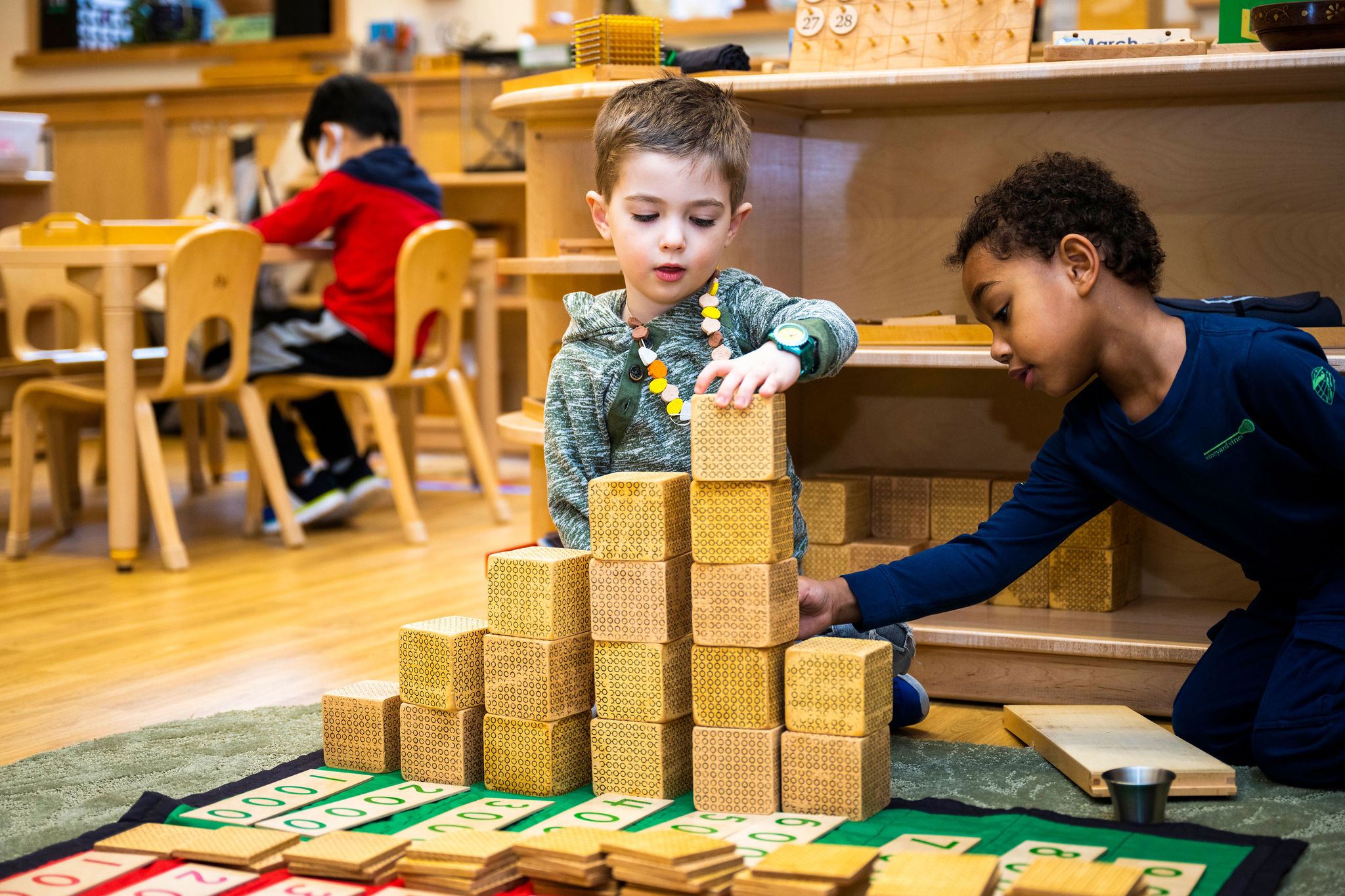
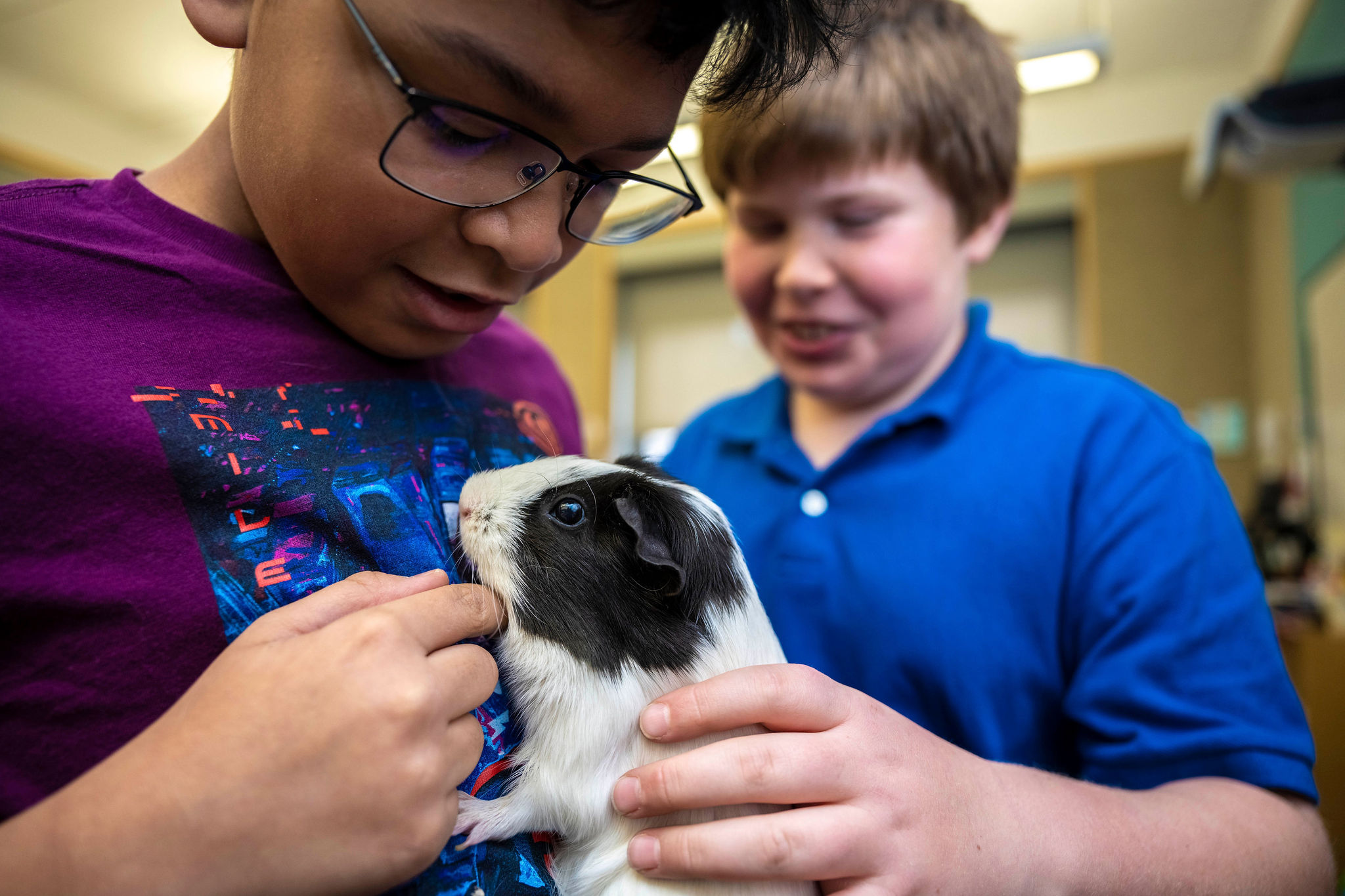
The study of science in the Early Program classrooms begins with phenomena that appear in the child’s own environment. Long before a concept is introduced, direct, sensorial experiences with the world around them are provided for the children, encouraging the curiosity that will eventually lead to understanding. Every Early Program classroom has it’s own science section, where materials are continuously replenished by the classroom teachers, and children are allowed to explore on their own. An important goal of the program is to foster an awareness of all living things, and their relationships to each other and to the environment.
The curriculum is very flexible, and a material will often appear on the shelves, or a lesson given, stemming from a question or object brought to school by a child. At other times, the teachers will provide an experience and arouse the children’s curiosity using hands-on materials of their own choosing, such as classroom animals, plants and magnets.
Full day Early Program students have science class once a week in the classroom. At this time, more directed scientific experimentation and exploration is available to them on topics such as the use of the senses, nutrition, living and non-living things, animals and plants, weather, the Earth, astronomy, physics, and experimentation. After interest is aroused through a lively group discussion, presentations are given to the children on how to use the hands - on activities that line the shelves of our beautiful science room. In true Montessori fashion, the children are given the opportunity to explore these activities on their own, and to truly "discover", as they learn to appreciate the power of scientific experimentation through use of their senses, and their own hands.
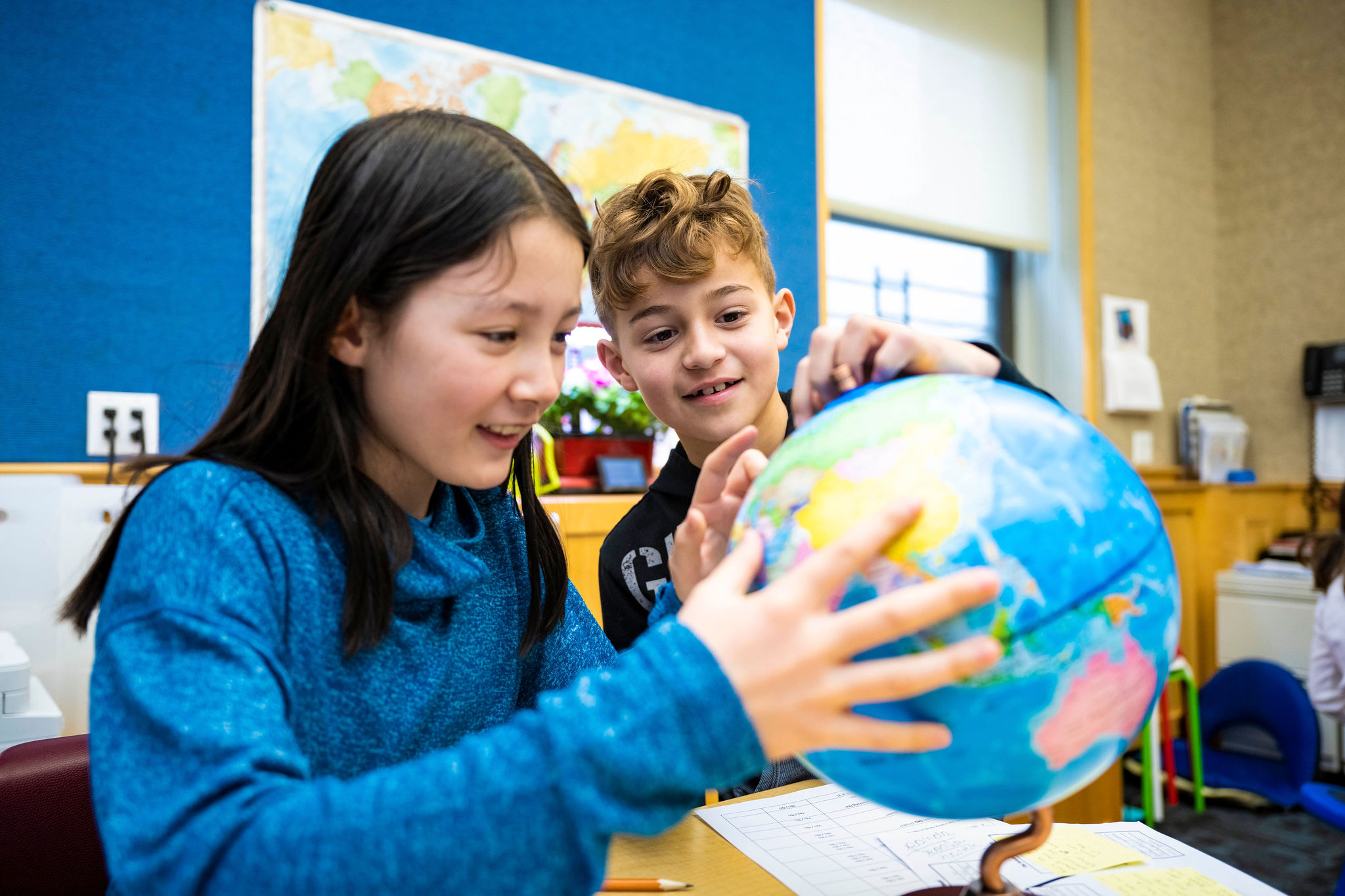
The Elementary Science Program studies phenomena that are observable in the children’s own world. By exploring common substances, processes, and living creatures, the children first discover that science is all around them. Gradually, they develop an awareness of the role that science plays in their lives and begin to learn the rules by which it operates.
The science room was recently renovated with all brand new, state-of-the art equipment. These improvements included: a smart board, a "zoo corner", a "greenhouse corner", lab equipment, investigative tools, etc.
By learning to observe and experiment, to question and to problem-solve, the children come to a natural understanding of the scientific method. Through discussion, research, and experiments, they come to respect the impact that humans have on their environment, preparing them to make responsible decisions as adults. Through speculation and hypothesis, they learn to apply and test their imaginations to the wonders of the world we all share.
Whenever possible, science units of study are coordinated with the other subjects. A hands-on exploration of live crayfish in the classroom correlates with a Lower Level study of aquatic animals. An Upper Level unit on space exploration overlaps with the building of water rockets and a unit on the solar system. Computers are frequently integrated into the science curriculum including the use of a digital microscope, digital temperature gauges, and a SmartBoard. A Middle Level and Upper Level unit on robotics allows students to build and program their own robots.
Their studies are highlighted with frequent field trips to museums, botanical gardens, and nature conservancies all over town.